
Dreaming of Rain When the Fire Comes First – September 6, 2020

Dreaming of Rain when the Fire Comes First

Rev. Kevin Tarsa
Unitarian Universalist Community of the Mountains
September 6, 2020
via Zoom

RENEWAL?

Here at UUCM we use monthly themes facilitated by the Soul Matters organization.

This summer, as I was looking ahead to these September services, I struggled to connect with the planned theme of “renewal.” Given the ongoing pandemic, the rising racial reckoning, the only-going-to-get-more-and-more-maddening presidential election, I felt that the real theme for September ought to be “Fasten your seatbelts, it’s gonna be a wild ride.”

As lovely as “renewal” sounded for this moment, it felt too early. I sensed renewal as a future we are heading toward, a point on the horizon toward which we must aim who we are and all that we are doing. Right now, the needed focus is more about resilience, I believe, more about becoming increasingly flexible, about finding and holding onto the threads of our essential selves and our essential values, and letting go of so much of what we usually try to cling to for a sense of security. Just when grasping feels most urgent.

Like the rain in Jan Garrett’s song, “I Dreamed of Rain,” renewal is coming, eventually, but we’ve got some steep miles to go.

The spiritual need, it seems to me, is to ready ourselves for renewal – and to help each other stay heart-centered and open-hearted on the rough, anxiety ridden, and transforming roads ahead – so that we are prepared for deep and transformational opportunities for renewal whenever portals open to them. Therefore, we’ve chosen to focus on heart-centered renewal as our theme this month, our theme for the year, really, with that larger, ongoing journey in mind and heart.

When Gail and I first brainstormed images and symbols that might embody the theme of renewal, Gail named the phoenix: that mythological bird that lives for five or six centuries in the desert, and then burns itself on a funeral pyre in order to rise from the ashes with renewed youth, to live through another cycle.

When Gail named the phoenix, I remembered a line in a song by Ben Abraham and Sara Bareilles, titled “This Is On Me.” It’s a song about the impending end of a relationship and the tentative possibilities of saving it in a new form. It’s a very tender song. Ben and Sara sing, “Some phoenix MAY rise from these ashes, but the fire comes first.”

That’s exactly how I feel about renewal and the future these days. Well, almost exactly. My hopeful self sings, instead, “Some phoenix will rise from these ashes, but the fire comes first.”

The fact that we have had so many fires since that conversation, including a fire right here, affecting some of you very directly, and close enough to put UUCM’s building in the evacuation warning zone, has heightened the strength of that image for me… and the depth and power of the journey between this moment and renewal to come.

WARBLING

Christy’s wonderful stories about Birding the Burn, about chronicling the abundant bird life that burn snags invite, sparked memories for me of a particular variety of bird from my childhood: the Kirtland’s Warbler.

The Kirtland’s warbler was one of the first species protected under the Endangered Species Act of 1973. They’d always been very rare since first identified by Europeans in 1841, but by 1974 their population was down to 167 singing males (which is how they count these birds, by their singing). At one time there were only 7 square miles of breeding habitat available to them.

Kirtland’s warblers winter in the Bahamas, and 95% of them nest in only one place on Earth – in the middle of the Michigan mitten, not far from where I grew up. They have one of the most geographically restricted breeding distributions of any bird in the continental United States.

The thing is, Kirtland’s warblers nest almost exclusively in jack pine trees.

And only in jack pine trees that are between 5ft and 16.5 feet tall.

And only in jack pine trees between 5ft and 16.5 feet tall growing close enough to each other for their branches to overlap, so as to hide the birds’ low nests.

This means that Kirtland’s warblers need relatively young, dense stands of jack pines, before the trees get too tall. Which means they require that new jack pine forests are getting started at least every 15 or 20 years, so they always have trees of the right height for nesting.

And there is one more catch.

Jack pine pinecones only open and release their seeds under extreme heat. Once in a very great while, the weather in Michigan can get hot enough to do it, but most of the time, it requires fire. It has required that Jack pine forests burn periodically in order for Kirtland’s Warblers to survive as a species.

OTHER KINDS OF FIRES

I expect that you have your own stories, your own metaphors and parallels, for this awareness: that in order for something new to arise, the old has to come apart enough – maybe even completely – in order to make the new possible. The truth that sometimes, things must burn or otherwise be destroyed in their current form, in order for new life to take shape, or even for existing, rare and precious life, to continue. The knowledge that sometimes it takes a while after the coming undone, before new growth reaches the right, sweet-spot height for giving birth.

You may know of relationships that wither, or die of starvation or thirst, or that implode or explode before people have enough energy to change their behaviors or take enough action toward something better. You may know of organizations and institutions that come crashing down or that slowly fade into silence, releasing people and resources to invest in something new, more in tune with current values and needs. You may know first-hand of dreams and expectations that have to be released, or dashed, or sometimes ripped away before a truer path and a truer self can be seen.

At the time, such painful endings seem the worst of all the possibilities. Until later… looking back, one recognizes the necessity of the ending for the beginnings and all the benefit that came after, eventually.

RAISING THE HEAT

In seminary, one of my teachers, Thandeka, who grew up as the child of a preacher in a black church, pointed out that the white protestant religious traditions, which is where UUism came from, tend to want to keep things cool, and reasoned, and orderly – emotionally and spiritually calm. Historically, we don’t want to get too worked up and we get anxious when it’s otherwise.

When what’s actually needed to bind us together meaningfully as a theologically varied community, what’s needed to reach into and transform our hearts, what’s needed to make room for the movement of the spirit, what’s needed to allow us to “love beyond belief” – as Thandeka would put it – is to raise the heat. She tried to teach us quiet, bookish, cool, reasoned ministerial students, to raise the heat in our services and our ministries.

The challenge, in general, is to raise the heat enough for transformation, but not so much that people get burned, or everything destroyed. The challenge is to manage a controlled burn, which, as you know, can’t always be controlled – for better, for worse. Or it’s important, at least, to recognize the value of the heat.

In my own internal journey, I’ve been extending this metaphor of necessary heat to the racial reckoning underway in the United States, as the nation faces in new ways its original sin of slavery. Nothing about racism and white supremacy will change significantly until there is enough heat and pressure to melt or burn what holds the current structures and behaviors in place.

Personally, I prefer that things happen calmly, peacefully, smoothly and without confrontation, but I know that addressing something as foundational to our nation’s heritage as racism will require some mighty powerful heat. Perhaps “the fires this time” will burn hot enough, or long enough, or in the right enough places, to open up more genuine possibility of liberation for all of us. Even Trump’s latest edict trying to ban racial sensitivity training in Federal agencies only adds fuel to that fire.

I find myself applying this heat metaphor to all of national politics these days, and the current threats to democracy as we have known it. As viscerally frightening as some of the possibilities feel, the way that I’m able to hold hope and to face the disorienting evening news each day, is to understand that these fires, too, may provide the heat needed to better “confirm America’s soul,” as Kathryn Lee Bates put it in America the Beautiful, and to lead the nation, ultimately, into more of its promise.

AH, BUDDHISM

I picture the Buddha smiling at all of this, at all of us, in our angst. The Buddha, who passes down through myriad lineages the truth that everything is, always has been, and always will be uncertain, unpredictable, and in disorienting flux. Guatama Buddha taught that we suffer when we deny and struggle against instability and change, in other words when we struggle against the nature of existence.

And, oh, my friends, I know, we are being gifted with a lot to struggle with lately.

Our greatest suffering might not come from what’s happening and what frightens us at the surface, but from our very human resistance to the truth that everything is always in motion, “that we [ourselves] are always in transition” As Pema Chödrön puts it, the “ordinary and obvious truth of change (24 The Places that Scare You).”

There, for me, is a pathway to hope: to learn to let go enough to enter the uncertainty with an open heart and open expectations, looking not backward to some sort of return to the familiar, but forward to some yet-to-be-revealed possibilities. To understand that even a burned forest is not truly barren. At least not for long.

With so much in our lives uncertain right now, this cannot help but be a time of deep anxiety, heartbreak and tenderness. These feelings come with the experience of this kind of in-between moment, and we’ll need to hold each other in all of the nurturing ways that we can, so that we might learn, as Rev. Doug Kraft invited us in his offering of Buddhism’s essential teachings: the invitation to turn toward our pain -instead of away from it – and to feel and see it on its own terms. The invitation to relax into our suffering in order to know it more honestly and more deeply. The invitation to settle into and savor the tenderness that is always underneath our angst and suffering, where, with openness, we might discover an experience of freedom.

As Doug said to us, “the only path that works in the long run goes through the suffering, [the] tenderness, and [the] openness rather than around them.”

AND?

Christy Sherr has shared with me that many people she talks to about burn snags expect that there is nothing there, in those forests after a fire, nothing of worth, but Christy knows from experience about the abundant life that arrives in a fire’s aftermath, and she lights up when she talks about it.

You’ll be glad to know that with controlled burns, and many other kinds of on-the-ground work, there are now 2300 breeding pairs of Kirtland’s Warblers. The recovery numbers exceeded expectations for 16 years in a row and Kirtland’s Warblers have been taken off the endangered species list.

It’s difficult to imagine with any sort of clarity life beyond the fires, the pandemic, the economic unknowns, the presidential election no matter how it turns out. We can’t know this future.

At this entrance to the church year – I invite us to stay heart-centered and open-hearted, and to dream of rain, yes. To dream, as much as we need, of rain coming down soft and easy, sweet and clear… Without any need to rhyme it with fear. We need the respite.

The rain will come, eventually.

And, in order to cultivate our resilience and our honest hope, for our own lives and for a world genuinely more compassionate, more sustainable, more just, I invite us to know also that, chances are, the fire comes first. And that that, may be just what’s needed to release the seeds of a future closer to our vision – seeds that despite all our previous efforts are still trapped inside impenetrable shells that will open only with high enough heat. Seeds for the next grove of growth and new life, in time.

So may it be, my friends.

So may WE be.
 

Mobilizing our Collective Compassion – July 5, 2020

Mobilizing our Collective Compassion
Rev. Kevin Tarsa
Unitarian Universalist Community of the Mountains
July 5, 2020
via Zoom

Our Journey with Compassion

How has your journey been, on the path of compassion?

We’ve been exploring compassion over the last 5 weeks – what compassion is and ways to cultivate our compassion – as if, like Black History month is often treated, compassion is a once-a-year, one-month focus. But Buddhist teachers remind us that the point of cultivating our compassion is so that compassion might become more than a temporary theme or a practice, that compassion might become a way of perceiving the world, a way of being in the world, a way of relating to all that is, was and will be, including ourselves.

Drawing on the Loving-Kindness or Metta Meditation from the Buddhist traditions we’ve been moving outward, from compassion for ourselves, to compassion for those with whom we have loving relationships, to people we don’t really know, to people whose behaviors and perspectives challenge and irk us.

Two Sundays ago, we invited you to find the growing edge of your compassion, to notice where you are holding someone just outside the circle of your active care and concern, and today we consider the possibility of extending our compassion fully, to encompass all beings and all that is, messy, painful, beautiful, exasperating, exhilarating and unpredictable as life and the universe and its inhabitants are.

I’ve held off naming the root meaning of the word “compassion,” which originates in ecclesiastical or church Latin in a word that meant “to suffer with,” to recognize and empathize with, to feel another’s suffering. As one person put it compassion, “… is the heart’s response to suffering.”

It begins not in response to some abstract idea of suffering, but to very particular and personal experiences of suffering that move us.

PR personnel for non-profits know this. Speaking of starving children in general, or of a war-torn nation in general does not generate the compassionate and generous response that a photo of one particular suffering child will, or the story of one particular suffering family.

Compassion begins in the specific, and that’s where we first need to nurture it, in our heart’s natural response to suffering.

Moving Outward

When we can extend our compassion outward into this final, all-encompassing ring in the Metta meditation practice, compassion toward all, we move beyond our empathetic response to particular suffering, toward a more abstract sense of compassion and a desire to lessen suffering in the world in general, wherever we find it.

As Thutpen Jinpa puts it, “Compassion [at this level] arises as our response to suffering; period. Whose suffering it is should not matter (232).”

Now, there’s compassion at its largest.

Jinpa quotes Shantideva (the 8th-century, Indian, Buddhist monk, scholar, and poet):

Simply because it’s suffering,
it must be warded off.
Why is any limitation put on this?
No one disputes and questions
why suffering should be prevented.
If [suffering] must be prevented, all of it must be.
If not, this goes for oneself and everyone.

Jinpa says that this is where justice and compassion come together: when we can extend our natural compassion for specific suffering, outward into a wider, more open responsiveness to all suffering, including compassion for those whose suffering leads them to cause suffering.

“Whose suffering it is should not matter.”

Collective Compassion

As Allison and I thought through this series of services, we wanted, here, on this final Sunday of the theme, to look at our Collective Compassion – the compassion that we share, that we cultivate in each other, that we focus and channel outward together to relieve suffering in the wider community. We wanted to bring the theme ‘round to “justice,” (which “is what love looks like in public,” according to Cornel West), justice which is calling so loudly these days for our attention and our action, even from our homes.

UUCM’s mission names compassion as the first of the reasons that this congregation exists at all, and the reason members cultivate various strengths: in order “to create a world more compassionate, sustainable and just.”  It is right that compassion is named first, because a more compassionate world demands a more sustainable and more just world. It’s strategic to begin with compassion if we want justice, compassion for all who suffer!

It’s a mission worthy of a religious community’s heart and soul and commitment, a mission worthy of the Universalist legacy we inherited which was rooted entirely in compassion. Our Universalist ancestors could not imagine that anyone ever would need to suffer for all eternity.

This congregation’s mission is a mission that demands that compassion be central, that compassion be the grounding for everything this congregation does and how it does it, from washing the dishes, to communicating via email, to disagreeing in a meeting, to showing up at rallies for black lives – with our masks on.

Collective Compassion

I caught up with a friend from seminary this week, who began a ministry on the east coast at the same time my ministry with you began here at UUCM. As part of our conversation my colleague named the challenge that most every UU congregation I’ve ever known faces.

He explained that he’s been trying to help the congregation he serves to collect and focus its social justice energies and resources in ways that will channel and amplify the members’ individual voices into something greater than the sum of the parts, but as different people have different justice causes that speak to their heart most strongly, they have not been able to get beyond the usual set of people doing separate good work in many different areas of the community, wondering why more members aren’t joining in their particular cause.

UUCM has faced that dynamic too, and leaders here have sought to focus the justice work of this congregation through a set of task forces – right now, one focusing on addressing climate change, one focusing on challenging white privilege, and one focusing on supporting and being in right relationship with the local indigenous people, the Nisenan.

This has indeed helped to focus congregational energies and resources in helpful ways, and I encourage you to lend your support and energy toward one of them. Pick one, and join others in that effort.

What’s needed

As I reflected on what would help deepen and strengthen this congregation’s collective justice work, its ability to channel and focus its capacity to speak truth to power, its ability to draw on its own members’ power to change systems in ways that could relieve suffering, – help its compassion flourish into solidarity, and its solidarity bear fruit in justice – I realized that it is the same thing that’s needed to deepen and strengthen the congregation period.

It is the need to cultivate compassion explicitly as the primary anchor for every aspect of this congregation’s life and liveliness. Not simply to name compassion as important or even as central, but to grow compassion, practice compassion, support compassion, expect compassion, live compassion with each other and as many rings outward as we possibly can, even and especially in the midst of putting ourselves on the line for the sake of justice in our community and nation.

The dominant cultural influences in this nation will continue to try to pull us toward a selfcenteredness that serves no one’s true well-being. Even in the midst of a pandemic that ought to be bringing us together, divisiveness reigns. It is counter cultural and challenging to prioritize compassion, to cultivate it courageously, patiently, deeply with each other. But informed and powered by well-developed individual compassion and group compassion, focusing compassion outward together would transform everyone involved, and truly help us use our power to lessen suffering in all the worlds we touch.

What Would it Take?

So, what would it take to cultivate compassion with that kind of clarity and commitment?

That’s one of the important questions before us, one that will require our creativity and our focus to answer together, as a community. Thupten Jinpa sheds light on a few aspects of the foundation.

He shares that the CompassionLab at the University of Michigan has been studying for 15 years now “how compassion can become organized and spread throughout an organization. . . .  Researchers at CompassionLab have found three, interrelated factors that allow compassion to take hold.” In this moment they each have a unique poignancy.

“The presence of networks of people who know each other well enough to share their pain;”
“Established routines within the organization … [that foster regular … human contact;]
[A shared set of values that supports compassion.]

Let’s start with the easy one, the values. We’re good there. UUCM’s got the values, at least in aspiration, in the hearts and minds of its members and friends, and in the Principles of the Unitarian Universalist Association.

Compassionate Warriors

I’ve been reading Dr. David Campt’s Compassionate Warrior Boot Camp for White Allies – the UU edition. Dr. Campt has been studying dialogue, inclusion and racial equity for 25 years. He specifically teamed up with UU Allison Mahaley to create a UU-centered resource for would-be allies, because he found that the values, principles and interests of UUs matched his approach to allyship unlike any other predominantly white organizations he had worked with.

Dr Campt’s approach to racial equity is rooted in developing and acting from compassion – rather than confrontation – in order to effectively engage the white people in our lives who are influenceable, but who are not there yet.

He takes some heat for this, from people who suggest that using compassion to address white supremacy risks coddling us white people in our white fragility. He makes a very clear case for why, in his experience, compassion is the most effective one-on-one path to a change of heart, and why he was willing to create a Spiritual edition of his white ally workbook for UUs because of the values to which we aspire.

As for Establishing routines that foster regular human contact; That’s going to take commitment, creativity and action from all of us over this next while, as the virus remains a factor in our lives. Online connections work well for some of us, and not for others.

René Wiley, with Family Ministry, and the Caring and Membership Teams, is initiating an invitation to everyone to make safe one-on-one connections with each other this summer, whether by phone or snail mail, or a driveby, or a fun quarantinable delivery, or a masked driveway visit.

Watch for an invitation from René. And however you might choose to do it, I would ask you, please to reach out to others, to foster some form of safe human contact, for your own sake and for the sake of the congregation.

Eventually, I trust, we’ll be able to find that contact more readily and directly in person. Meanwhile, we’ll need to work at it.

The first factor, too, will warrant our creative attention now: nurturing networks of people who know each other well enough to share their pain.

UUCM’s Soul Matters Circles are meant to foster that kind of knowing, but ideally we are investing ourselves in that kind of knowing – at least a little –  in every gathering, every conversation, whether online or in person, in opportunites to reveal ourselves honestly and be seen for who we are, and the opportunity to witness, with care and compassion, who others are when they reveal themselves honestly. You are not alone.

I encourage you to lean courageously into the ways you might get to know others here well enough to share their pain, and for others to know you well enough to share theirs. Even while our physical in-person contact is limited.

Values, regular contact, networks of people who know each other well enough to share their pain.

The pandemic challenges these foundational aspects of compassion in religious community life, at least as we have known them, but I believe that they are still important and available, with some creativity, some flexibility, some intention, and some commitment on all our parts.

I’m about to take time for study leave and vacation. I’ll be thinking about how I might best cultivate compassion in myself and how I might best support compassion in the life of this congregation.

I invite you to do the same…with courageous love, and a sense of wonder…as you are reaching out to one another, as you are getting to know each other well enough to share your pain, and as you are working toward a more just world in the ways that you can.

I believe that if we truly center compassion as the key, our collective compassion can indeed “flourish into solidarity,” and our “solidarity can bear the fruit of justice.”

So may it be.

Let’s Do

Each week we’ve invited you to do something that cultivates or strengthens compassion. This week, I invite you to take part in a justice effort that is right now drawing on all three of those aspects named by CompassionLab, and involving all three Justice Task Forces.

Thanks to Reine Thibeault, every Thursday between now and early November, at 4:00, via Zoom, members and friends gather to complete the handwritten portion of letters which will later be sent to infrequent voters around the country, particularly underrepresented voters, through the VoteFoward program. This is a tactic that has proven successful in other elections.

Rather than simply writing those letters alone, people connect and support and get to know each other while taking on this COVID-safe way to seek a more just world. Often there will be a theme or an artist or an additional activity. This past week, Tom Wernigg serenaded the group with his songs – on his Birthday, no less! Thanks, Tom.

I would invite you to take part, at least once and hopefully many times.

UUCM’s goal is to prepare 3000 letters by November.

For more information, Check out the events page at uugrassvalley.org

Or Contact: new board member Reine Thibeault with question, or watch the echalice for the link and passcode.


Resources consulted, cited, recommended…

Campt, David W., and Mahaley, Alison. Equipping Anti-Racism Allies Unitarian Universalist Edition: Fighting Racism…One Conversation at a Time. N.p., I Am Publications, 2020.

Jinpa, Thupten. A Fearless Heart: How the Courage to be Compassionate Can Transform Our Lives. United States, Hudson Street Press, 2015.

CompassionLab: a group of organizational researchers who strive to create a new vision of organizations as sites for the development and expression of compassion.

Vote Forward: Write letters to increase voter turnout, particularly among underrepresented populations.

The Evolution of Compassion – June 21, 2020


Reflection I

The Language of Compassion
Allison Rivers Samson
Unitarian Universalist Community of the Mountains
A reflection delivered June 21, 2020
via Zoom

AllisonRiversSamson.com

When most folx consider compassion, the first thought is extending it to other people. However, there are often limits to whom we offer that compassion. For example, it can be easier to feel toward children; people who experience crime, tragedy, illness; or those who might be considered “victims.”

Oftentimes, we’re more compassionate to those who are like us, shutting out those we see as “other.”

Radical welcoming is one of our Unitarian Universalist spiritual practices. One of the ways we express this is by honoring someone’s preferred pronoun. We set ourselves free of the binary of she or he. And thankfully, society is catching up and moving past the mandate against using they as a pronoun for a single person.

What about when we refer to non-humans? The most common pronoun is “it” when speaking of a spider, ant, or even a dog. It creates a distance, a separation. It goes against our UU 7th Principle: Respect for the interdependent web of all existence of which we are a part.

As I read Braiding Sweetgrass by Dr. Robin Wall Kimmerer, I learned about the grammar of animacy. Animacy is a way of respecting non-human beings by expressing that they have a spirit, are alive, and sentient. The grammar of animacy would never use the pronoun “it” to describe a living being, just as in English, we wouldn’t use “it” when speaking about a human.

The author gives the example of seeing your grandmother in the kitchen and saying “It is making soup.” Sounds strange, right? This is because it goes against our fundamental sense of respect and reduces a person to a thing—someone to something.

As a personal practice, I’ve long been using the language of someone, not something, and saying them instead of it in reference to non-human animals. I had no idea I’d been speaking the language of animacy!
Dr Kimmerer sums this up, “The arrogance of English is that the only way to be animate, to be worthy of respect and moral concern, is to be a human.”

Every genocide begins with dehumanizing language. Once we move someone outside of what we believe is humanity, it becomes possible to do anything to them.

That’s not the only way that our language can lead to annihilation. Years ago, I learned that our communication is unnecessarily embedded with violence.

Has anyone ever said to you, “I need to be brutally honest.” Why add brutality, when honesty will do? Other common phrases are killing time when there’s space in our schedules, bite the bullet when we’re being courageous, and shoot from the hip when someone is being direct.

These expressions are so normalized that their aggressiveness might be easy to miss.

And just listen to the sayings we use that include non-human animals: kill two birds with one stone, more than one way to skin a cat, and don’t beat a dead horse.

Why such violence when we could feed two birds with one scone, use more than one way to peel a potato, and know that there’s no need to feed a fed horse?

Is it possible that cruel language hinders our compassion and shuts down parts of our souls?

In his book, Helium, Spoken Word Poet Rudy Francisco writes of being asked to kill a spider in a poem titled, Mercy. Recognizing that the spider is simply living their life without being a bother, Rudy instead chooses a cup and a napkin to relocate and free the spider. He says that if ever he is found in the wrong place at the wrong time just being alive, his hope is to be met with the same kind of mercy.

Not a casual hope for a Black man in this country.

Although I consistently relocate spiders, my compassion can get sloppy when it comes to mosquitos. And sometimes I’m too hasty to treat ants with the mercy I would like to receive myself. When I don’t take the time to act with care, I feel guilty. It comes at a great cost to my integrity when I override my natural states of empathy and compassion.

Seeing someone not something is a way to look with the eyes of compassion.

Our capacity isn’t limited. The more we learn, open ourselves to the hard things, and empathize, the more our compassion can grow.

Using the language of animacy can help us be more inclusive.

By changing the way we think and speak, we can change the way we live and act.

Sources cited, referenced, consulted…

Mercy by Rudy Francisco  iamrudyfrancisco.com

Kimmerer, Robin Wall. Braiding Sweetgrass: Indigenous Wisdom, Scientific Knowledge and the Teachings of Plants. United States, Milkweed Editions, 2013.


Reflection II

Compassion at the Edge
Rev. Kevin Tarsa
Unitarian Universalist Community of the Mountains
A reflection delivered June 21, 2020
via Zoom

One More

Poet Marge Piercy, writing of oppression and solidarity and unity, concludes her poem “The Low Road” by writing:

It starts when you say we
and know who you mean;
and each day you mean
one more.

That is the call that comes with cultivating compassion: Saying “we,” knowing who you mean, and each day meaning one more. It is the call of the compassionate side of every life-enhancing religious tradition, including our Unitarian Universalist tradition, which asks that we affirm the inherent worth and dignity of every person, or, as some have already expanded it, the inherent worth and dignity of every being.

The Vertical and the Horizontal

Religion is sometimes framed as having both a vertical dimension and a horizontal dimension.

The vertical dimension of religion is the transcendent dimension – which has do to with one’s sense of connection and relationship to what is ultimately beyond us  – to God, to Spirit, to life itself, to evolution, to the unfolding universe, to random chance.

The horizontal dimension of religion has to do with our relationship to each other, to humanity, to other animals, to the world, on this concrete, interactive, plane.

Cultivating compassion extends the range of our care and concern, our sense of who we really mean by “we,” on the horizontal dimension. It is anchored in and inspired by our transcendent sense of the nature of the world and existence, but it manifests and plays out in the widening circles of whose well-being we care about, on this horizontal – currently COVID-19 graced – plane, where our compassion is as our compassion does.

The Changing Edges of our Compassion

Those of us who have been around for a while have had chance to extend our circle of care and compassion, and so we know that the boundaries are not fixed, and that how far our compassion extends is up to us. We have had chances to learn of other persons’ and other cultures’ edges in ways that ask us to question our own arbitrary limits.

I appreciate the story Hey, Little Ant, that Lindsay read earlier, and I appreciate Allison’s sharing with us at other times her own ethical framework for her eating decisions.  Our relationships to insects and eating are two great places to start.

I confess have killed many insects in my lifetime, because they were bothersome, or worrisome, or dangerous or painful. Though I still rarely have immediate qualms about swatting a mosquito, I do keep a plastic cup and a stiff piece of cardstock on hand to sequester and carry and liberate most critters that find their way into my apartment.

Then I think of Jainism, of the most ancient religious traditions, which teaches that the highest religious duty, without which a religion is useless they say, is not to kill or harm any being, any life, such that not only are Jains vegetarian, but the most devoted Jains sweep the path in front of them as they walk, lest they unknowingly step on an ant or any form of life, and some wear a cloth over their nose and mouth, not to prevent the spread of a virus, but to prevent the possibility of accidentally inhaling or ingesting a gnat.

A contemporary Jain nun living in London explained that she was obligated to eat every bit of food she was given, because if any of the food were thrown into the garbage, microorganisms would grow on the food, and then those microorganisms would die in the trash bin.

I know, that sounds extreme – or at least like way too much work and bother – to many of us, but it points out that the edges of human compassion are not universal and that the range is wide.

I remember being challenged years ago when I first learned that some people in some places eat dogs and cats and insects. I remember photograph in a National Geographic magazine of a giant walking stick, a walking stick almost 2 feet long, and on a leash. The young man in the photo was raising to become a meal. I was shocked and disgusted. And that kind of encounter asked me to ask myself why? Why not eat dogs and cats and horses and rats and walking sticks if one is going to eat cows and pigs chickens and escargot snails and horse-hoof gelatin. Who draws the lines?

The lines are not universal, as I had assumed when I was young. They are shaped by the norms of our families and our communities, by our religious traditions and by our own experience. So the question is where do I draw the lines of my care and concern? What are the front and growing edges of my compassion?

Black Lives Mattering

You don’t have to move very far at all, to get from those questions to the Black Lives Matter moment that’s on fire right now. Who do we mean when we say “we.” A national legacy of enslaving other human beings and centuries of continuing enculturation work against those of us who are white people learning to include black persons in our meaning of we. Built into our governance, our politics, our economics, our stories, and our many systems, are associations of fear and disgust, danger and illness with black persons and other non-white persons. It’s playing out even now as some claim that it’s black people’s behavior or unique physiology that accounts for the higher rates of COVID-19 infection in black communities.

It’s perpetuated in our language, as Allison has noted. Here’s one important example: the shift from using the term “slaves,” to using the term “people who were enslaved.” More reporters and commentators are catching on, but not all.

To label someone a slave is to say that being a slave is an inherent, intrinsic part of that person’s nature. That’s who they are, by nature, a slave. It places the cause of their enslavement on their own shoulders.

To speak, on the other hand, of “people who were enslaved” retains the humanity of those persons, identifies them as “we” and puts the responsibility for their enslavement where it belongs, on the enslavers, on the people who chose to enslave other human beings. A small change in wording, with tremendous implications for how we portray and see black people, and for shifting the line of care and inclusion.

Where Is the Edge of Your Compassion?

This third Sunday exploring compassion, as we move from self-compassion and compassion for other people in our life, to expanding who we mean when we say “we,” our invitation to you is to locate one growing edge of your compassion, where the line is being challenged, or tested, stretched or loosened, or opened….and to consider whether and in what ways you are being called to extend your compassion out a little bit farther.\

Maybe the current edge of your compassion has to do with which animals, or which life forms you are able to feel empathy with, such that you want them not to suffer, want them be happy, healthy, at ease.

Maybe the current edge of your compassion has to do with an entire group of people – a culture, a race, a gender, a political persuasion, a nationality, a clique –

Maybe the current edge of your compassion has to do with someone very near, a family member or a friend or a person whose behavior grates on your nerves….

The indicator or clue that you are at an edge might be that someone, some being, is just outside the ring of your inclusion, just outside your sense of we, someone you are holding just out of reach in the category of “other” – and that you are not feeling entirely right or at ease about that.

We invite you to spend some time and attention at your edge this week. Some of the options:

Use the Metta/Loving Kindness meditation practice.
Practice using a different pronoun, something other than “it,” for example
Notice the language you are using and hearing. Is it unnecessarily violent, or does it inaccurately claim to capture someone’s essence, like the word “slave.”
Get a cup and stiff piece of paper out, have at the ready, to liberate the critters you don’t really want to share your space with at the moment
Choose not to step on that ant or watch your path more carefully as you move down the sidewalk.
Make different choices about what you eat this week.

Cultivating compassion – practicing compassion – changes us, not only on the horizontal dimension, but also, as our heart and awareness shift and expand, on the vertical dimension, in  our sense of relationship to all that transcends our individual life and self. And when that shifts, who knows what else could happen toward the good.

May you know self-compassion, compassion for the others, compassion for the widest circle of “we” that you can hold.

So may we be.

Sources cited, referenced, consulted…

Jinpa, Thupten. A Fearless Heart: How the Courage to be Compassionate Can Transform Our Lives. United States, Hudson Street Press, 2015.

Piercy, Marge. “The Low Road,” published in The Moon Is Always Female. United States, Knopf Doubleday Publishing Group, 2013.

Interview with Samani Pratibha Pragya on BBC Radio World Service’s “Heart and Soul.” The Incredibly strict diet of a Jain monk. https://www.bbc.com/news/blogs-magazine-monitor-32037919

The Art of Compassion – June 14, 2020

Offering our loving kindness is easy when we like the person on the receiving end. And we can stretch, without too much effort, to encompass the stranger about whom we feel neutral. Now, the person whose behavior irks or angers us? Hmmm….  

From the self-compassion we cultivated the previous week, we continue our journey along the path of the Buddhist Metta meditation, extending the circle of our loving care and concern a few rings outward. 


Tongues of Fire – May 31, 2020

 Note: This service came the week after George Floyd was murdered in Minneapolis, the week the protests and riots began, and the week the number of COVID-19 deaths in the United States passed the 100,000 mark.

 Rev Kevin’s opening at the beginning of the service included the following:

 “This past week has stacked heartbreak upon heartbreak, stoked fear upon fear, piled discouragement upon discouragement. It has brought a terribly heavy load for the heart and for the spirit, and I know that some of us are feeling buried beneath the weight of it.

. . . beneath the death of George Floyd, yet another black person held under the knee of yet another white person, long enough and visibly enough this time to tear your heart and your hope for humanity, . . .killed in a way that horrifies most, but that shocks only those who have not looked deeply beneath the veneer that light skin and privilege cast over everything on this continent, a veneer that has required a white knee on the neck or back of every person of any other color for more than 500 years.”

Tongues of Fire
Rev. Kevin Tarsa
Unitarian Universalist Community of the Mountains
A sermon delivered May 31, 2020
via Zoom

[Watch for the video of the sermon soon on UUCM’s YouTube Channel.]

I had originally thought to use this morning to invite us to look forward, as a congregation, from this sustained, external limbo, this liminal threshold from which the view of the future is rather clouded. That will have to come another time. The week is requiring something different.

Like New York Times columnist, David Brooks, who I mentioned earlier, I am feeling short on words this week. Like some of you, I am a person who must turn first inward in order to express outwardly, and there is so much to take in lately. I need to feel if for a time before I can speak to it fully.

Maybe it would be helpful and “enough” to rage cathartically today against the injustices, the systems, the particular behaviors that are so destructive to what we value, and I may yet.

Have you been swearing as much as I have lately, when you receive the daily news stories? Or crying?

I’m raging a fair amount these days, in my home-bound introverted way, but beneath my own anger and my fear, my learning about racism, white supremacy, and U.S. history no longer leads me to see individual police officers or departments, or trios of murderous white vigilantes, or frightened and frightening dog walkers, or even individual self-obsessed people in high national office as the true source of the destruction, or the useful targets of my rage.

Their behaviors must be stopped, yes, using all the means we have or can create, and persons and institutions must be held accountable for their actions, yes. That would be a genuine move forward!

And…. while we are doing that, we have to see that they are, in important ways, racism’s decoys, part of white supremacy’s slight-of-hand that diverts our attention to the shocking and the horrifying as if the latest tragedy is an aberration, focus our attention on the individual bad actors we can rage against safely and righteously, distancing ourselves from them, while the real dynamics are stoked and sustained every day out of sight where we don’t see them, including within ourselves.

Racism is a shape-shifter, my teachers have taught me. It hides in plain view and keeps mutating to avoid detection, so I’ve become wary of the obvious.

Another Kind of Virus

As we members of UUCM’s Challenging White Privilege group are trying to learn and take to heart, we are carriers of the virus of racism, all of us, even when we don’t recognize having symptoms, and we transmit the infection without realizing it, in myriad invisible droplets.

Quarantining a few obviously symptomatic “others” will not ultimately protect people of color or ourselves. Thinking that it will helps to keep racism in place.  It’s going to take massive and widespread changes of heart and behavior, with enough of us “in it” together, and we are each responsible for starting with our own awareness and behaviors.

I went to a hardware store on Memorial Day. I know, not the smartest move. A busy hardware store that day. I did not see a single employee wearing a mask and only a very small percentage of us shoppers wearing masks. This, on a weekend known for out-of-town travel. It’s a story I heard many of you repeating from your experiences in other local stores and businesses.

The disturbing Memorial Day weekend party behaviors – the unmasked, undistanced, seemingly oblivious behaviors relative to the COVID-19 virus – give a symbolic tiny hint at the scale and the scope of challenging racism and white supremacy.

Dr. Anthony Fauci’s recent words to John Hopkins University students come to mind: He said to them:

“All of you, directly or indirectly, will be [must be, I would say] doing your part together with the rest of us to come out from under the shadow of this pandemic.”

“All of you, directly or indirectly, [must be, I would say] doing your part together with the rest of us to come out from under the shadow of this pandemic [of white supremacy.]”

And as Dr. Fauci said to students at the college of the Holy Cross:

“Now is the time, if ever there was one,  for us to care selflessly about one another.”

Who Is This About, Anyway?

Getting angry and loud and righteous, as white persons, or feeling the pain personally, quietly and deeply are important and can be useful IF they strengthen our empathy, our connection, our compassion, our resolve, or motivation, or our solidarity.

In my experience they sometimes risk keeping us focused on ourselves rather than on those who are suffering most, and they risk serving as release valves that help those of us who are white to feel better emotionally, without asking much of us, and without lasting or helpful effect. Righteousness and despair are luxuries that only those of us with privilege can afford.

So, rage, and cry, and worry, and despair even, for a moment, if you need and if it will help – those are valid and appropriate responses to the events of this past week, the past four years, the past decade, the past century, the past 500+ years. And as soon as you can, while you are doing that, notice where your rage, your worry, your despair is focused. Is it on one of the decoys, or on a true, more subtle, much more widespread, near, and viral source? Is it leading you to action, or inaction?

I’m just starting to learn, as a white man, to not let shame or my perfectionism, or my desire to be seen as good to get in the way of accepting the infectious, viral nature of racism and its presence in me. I’ve got a long way to go. Denial and resistance are trademark symptoms of this virus and there is no vaccine in sight.

We’re going to have to do this the personal, sustained, imperfect, over-the-long-haul way, as daunting or discouraging as that may feel to us – like the thought of a long road of sequestering ahead. It’s yet another invitation of this extraordinary time, when just maybe, things will be shaken up enough, when we will be shaken up enough, for something new to be possible.

Pentecost: Preparing for a Blessing

To invite us into this moment more poetically and prayerfully, I would like to close by preparing us for a blessing…a blessing for Pentecost Day, which is today, written five years ago and exactly for today by Jan Richardson. It was published in her book Circles of Grace: Blessings for the Season. Beth Karow shared it with the Worship Team (Thank you, Beth!), and it is a gift in this moment.

For those who are not familiar with Pentecost, it is first a Jewish holy day 50 days after Passover, thus “Pente-cost,” meaning “50th day.” It is rooted in earlier celebrations of the first wheat harvest of the summer. In Christianity, it marks the 49th day after Easter, the “50th day,” if you include Easter.

According to the story – and I invite you to hear this story as a story, in the ways that allow you to hear its truths – the followers of Jesus were gathered for the Jewish holy day of Pentecost. Their beloved and radically inclusive teacher had been killed violently, had appeared to them for a time, and had ascended to heaven, leaving them on earth, having promised that he would at some point send his spirit to guide them. They were waiting, lost, afraid, uncertain, …heart-broken.

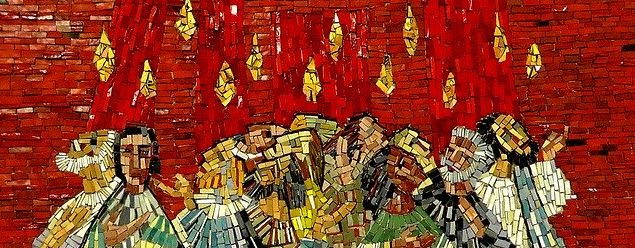
“And suddenly from heaven there came a sound like the rush of a violent wind,” [the story says] “and it filled the entire house where they were sitting. 3 Divided tongues, as of fire, appeared among them, and a tongue rested on each of them. 4 All of them were filled with the Holy Spirit and began to speak in other languages, as the Spirit gave them ability.

 Acts 2: 1-4 NRSV

It is in that moment that those brokenhearted and fearful followers found courage and confidence and direction, and began to take their beloved teacher’s message of love and radical inclusion out to a wider world. In Christian communities, it is celebrated as the beginning of the Christian church.

I invite you to receive this blessing through the events of this week and all the related events that have preceded it.

I invite you to receive this blessing through the values of this Unitarian Universalist tradition and congregation.

I invite you to receive this blessing through the lens of Tikkun Olam and the shatterings that have split love into countless fragments that we are called to gather up one by one.*

I invite you to receive this blessing through the lenses that best open its gifts to your heart and your mind in this moment.

This Grace That Scorches Us
A Blessing for Pentecost Day

by Jan Richardson

http://paintedprayerbook.com/2014/06/01/pentecost-this-grace-that-scorches-us/


*  A reference to Amy Petrie Shaw’s free retelling of the Shevirat haKeilim (from the Kabbalah), offered earlier in the service. Find it at https://www.uua.org/worship/words/story/shattering-vessels


Flower Power and Radical Welcome – May 17, 2020

Flower Power and Radical Welcome

A message delivered via Zoom, May 17, 2020
by Rev. Kevin Tarsa

Unitarian Universalist Community of the Mountains
Grass Valley, California

For pdf of sermon text click HERE.

Reading  Open Up the Doors by Rev. Lindasusan Ulrich

https://www.uua.org/worship/words/opening/open-doors

Opening Doors

I know, the metaphor of opening doors is ironic, even painful, at this moment, when for everyone’s safety the doors of our homes now mark a threshold that we do not let most people cross. It becomes a metaphor this morning for opening these virtual doorways or these Zoom windows as our current community doorways. It can also be a metaphor for the very personal doors we are opening in our inner life and awareness.

The Unitarian Flower Ceremony

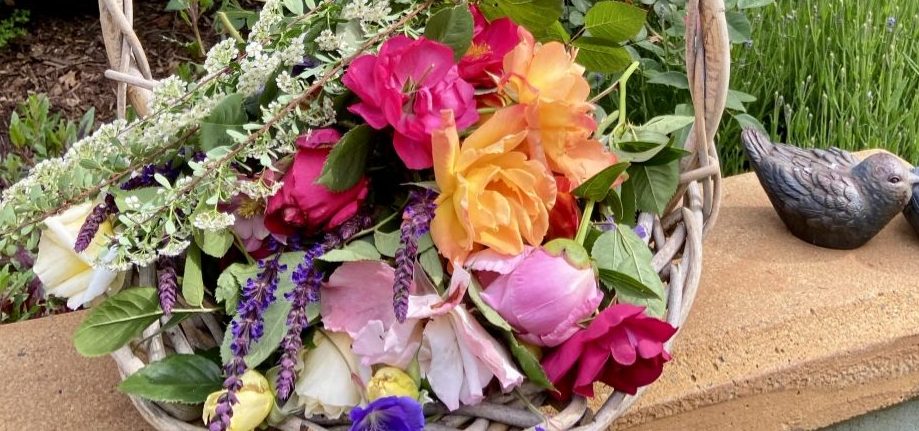
In the annual service we might have held today, everyone would have been invited to bring a flower, or a blossoming stem, or a twig to create together a big, beautiful, eclectic bouquet or set of bouquets made up of our individual contributions.

It is an annual ritual begun in a Unitarian church in Prague in 1923 by Norbert Capek. After seeking political safety in the U.S. between the world wars, and after discovering Unitarianism here, Norbert and his wife, Maja, returned to their native Bohemia, which by then had become part of Czechoslovakia, and they started a Unitarian church that twenty years later, was the largest Unitarian congregation in the world, with 3200 members.

In the beginning, however, in the early 1920s, it was a small, simple, unadorned church. Norbert created a ritual to bring beauty and at the same time to embody a foundational awareness in Unitarianism – the idea that every person has beauty and value, (worth and dignity), that every person brings something unique and vital to the community, if we will let them, and that when we all contribute who we are, as different as we are, something extraordinary can be born, something sweeter than we know.

I’m missing today that annual physical ritual of creating those bouquets, and it’s been wonderful to see the photos of yourselves in the midst of your beautiful flowers and at your home doorways. I invite and encourage you to be part of the readings and the images that we bring into Sunday mornings each week now. Keep watching for the invitations and send your photos or recordings in. If that sounds daunting or you do not have the equipment or are not sure how to do it, Please check in with us. We may be able to help.

We are needing, these days, to find new ways to bring who we are to this shared community, and it looks like we are going to have time to get very thoughtful and creative and good at this.

The Long Road Ahead

The president of the Unitarian Universalist Association, Rev. Susan Frederick-Gray, wrote to us this week offering an update on the Association’s guidance regarding in-person services. Based on consultations with public health officials and other experts, the leadership of our UUA continues to recommend that congregations not gather in person. They also recommend that “congregations begin planning for virtual operations for the next year (through May 2021).”

Immediately after that statement, Susan wrote, “Take a moment to breathe. I know this is significant.”

I invite you to take a moment to breathe. A whole year yet. Breathe……

As President Frederick-Gray points out in her message, approaching the future this way will allow us “to be creative with our long-term planning while still being flexible if conditions change significantly.” If things get safer sooner, we can adapt to that!

I know that most, if not all, of you will agree with her that “Our care for the well-being and safety of our members, [friends and] staff must be a priority in this pandemic.” If we did not realize it before, we are reminded each day in the news that “our actions directly impact the health and well-being of our neighbors.”

Susan goes on to point out that” religious gatherings are considered highly contagious events. The acts of singing, the familiarity of people across households, the multigenerational community of children, youth, adults, and seniors—the things that make our congregations so special—also create more risk for spreading the virus.”

From a different angle, I love the idea that our religious gatherings are highly contagious events! May ours be so!

And if we are to open up the doors more, wider still, as far as they will go, we’ll need to figure out how to open them up in new ways virtually. One of the gifts already of being entirely online as a congregation is that geographic distance is no longer a barrier to participation. It’s been great to see the familiar names and faces of people who have moved, and it’s been wonderful as well to see you who are new to this community. If you are wanting to know more about UUism or UUCM, please let us know. With the long haul in mind, we are looking for ways to open the doors and to connect meaningfully.

Meanwhile, while we are all looking out our separate doorways, for the next year perhaps, we can be looking inside and growing our internal commitment to become, together, ever more radically welcoming in heart and mind.

The Rest of the Story

The flower ritual that Norbert Capek created doesn’t end with creating the shared bouquet. At the end of the service he invited everyone to take a different flower or twig home with them as symbols of the gifts they received from each other. If we understand and take to heart the Unitarian Universalist values beneath that ritual to their fullest, we will seek to value the gifts that each person brings, even those whose presence stretches us and invites us to change.

Stephanie Spellers writes in powerful and practical terms of the notion of radical welcome. I was introduced to an adaption of her work in a course I took recently in trans-inclusion from Zr. Alex Kapitan and Rev. Mykal Slack, a course in becoming truly welcoming to transgender and non-binary persons. I’m drawing on their work and using some of their language this morning.

Today, I simply want to share the progression of welcoming – from invitation, to inclusion, to radical welcome – so that as we are learning to live and to celebrate community in new ways together, we can also be imagining community in new ways together.

Invitation and Inclusion

Briefly, welcome begins with Invitation

At the level of invitation we say that everyone is welcome, regardless of…fill in the blank. We invite everyone in, “whether or not we are prepared for their presence” – whether or not we are prepared for their spiritual views, their oddities, their political views, their smell, their mental health challenges, their marginalized identities, their difference.

At the level of invitation we offer a general and broad welcome, assuming that our being friendly is enough for someone to feel welcome, and we give the job of welcoming to the greeters. At this level, of invitation, the underlying message is, “You will be assimilated”…to the extent you are willing to be like us, to believe like us, to behave like us. We invite you into our like-minded community.

Sound familiar?
It’s an important starting place – in our personal lives and in our community life,.

At the next level of welcome, the level of inclusion, we work a little harder at incorporating those who are different in some way. We are more specific in our welcome, we name LGBTQ persons, or that Black Lives Matter. We make surface changes to reduce the barriers  – we have all-gender restrooms and appropriate signs, we put in ramps for wheelchairs, we put our preferred pronouns on our nametags, we include photographs of people of color in our visual elements.

We work at the welcoming, but only up to the point where we might have to change our culture, have to change the way we do things around here in order for new folks to feel truly welcome, onnly up to the point where we don’t have to give up the things that we like in order to help someone else have the things that are important to them: our style of music or our style of services, for example, our kinds of social events, and ways of meeting, the language we use…

Sound familiar?
It’s an important move to make in our personal lives and in our community life, moving from invitation to inclusion.

Radical Welcome

Radical Welcome, then, genuinely embodies the belief that each one of us is better off when all of us can be ourselves and express ourselves fully, when we can learn from one another. People outside the majority norms aren’t merely tolerated, but centered, integrated and valued fully for who they are and the unique perspective and the life-changing gifts they bring. When offering a radical welcome, new, out-of-our-ordinary people, especially people typically marginalized in some way, are not only invited and accepted and incorporate, their presence transforms the community, liberates the community from its assimilating sameness.

Radical welcome is about allowing out-of-our-ordinary people to change us.

So, a quick Caveat: There is a boundary when it comes to behavior that is destructive. Not anything goes. We cannot welcome all behavior. But radical welcome asks us to discern carefully whether a person’s behavior is truly destructive, or rather simply uncomfortably but helpfully disruptive.

Why Now? 

While this may all seem rather removed from the stay-at-home realities of the moment, a year staying at home (or however long it turns out to be) is going to ask us to get increasingly clear about what community is, what community means, and what community can be, at its best.

My hope is that if we plant the seeds now for thinking about who we are and how, about who we welcome and how, we might be able to open our doors wider still, to grow our vision for what UUCM can be in this community. We can look for the ways to live toward that vision now, even while otherwise staying at home. We can live toward it in all the choices we make about how to connect and gather and act in the world, even from our individual living rooms.

In the course, we spoke of something as seemingly simple as the welcoming words we use in our services. As in many other congregations, we often say something like, “We welcome you, whether you are young or old, theist or humanist, whether you walked in or rolled in, etc. The point here being that WE welcome YOU.

Radical welcome, instead, invites “we” language.

“We are young, we are old. We are comfortable wealthy, we are struggling to make ends meet. We are at many places long the spectrum of gender identity. We are frightened, we are content. We are humanist, we are theist. We are the bearers of white privilege, we are targets of harm because of the color of our skin.”

Not WE welcome YOU, but WE are US. We, as we are, are already included.

Such a small turn in language and framing, for such a significant difference in the meaning and the sense of community.

In Radical Welcome, everyone takes responsibility for fostering belonging and for building relationships, and members grow deeper in their faith and in their humanity as a result.

Stephanie Spellers suggests that Radical Welcome is not about liberating those who are coming in the doors. It’s about liberating those of us who are already inside.

Open up the doors, my friends, 
Lest we keep the stranger out 

Open up the doors, my friends,
and in so doing, let yourself in.

So may it be.

So may we be.

Sources cited, referenced, consulted…

Open Up the Doors by Rev. Lindasusan Ulrich
https://www.uua.org/worship/words/opening/open-doors

Frederick-Gray, Susan. Pandemic time recommendations from the UUA, in a “special announcement” email, May 14, 2020.

Grohsmeyer, Janeen K.. A Lamp in Every Corner. Unitarian Universalist Association, 2004. – “A Plain and Simple Beauty: The Flower Communion”

“Transgender Inclusion in Congregations” (online course) by Zr. Alex Kapitan and Rev. Mykal Slack of the Transforming Hearts Collective.
https://www.transformingheartscollective.org/
https://www.transformingheartscollective.org/online-courses

Morgensen, Faye. Ancient Stories for Modern Times: 50 Short Wisdom Tales for All Ages. United States, Skinner House Books, 2016.

“Milk and Sugar” from the epic poem, Quissa-I Sanjan, 1599 by Bahman Kaikobad Hamjiar Sanjana.

Two other versions of the “Sugar in the Milk” story:
http://www.parsicuisine.com/sugar-in-the-milk-a-parsi-kitchen-story/
https://www.npr.org/2008/03/20/88505980/sugar-in-the-milk-a-parsi-kitchen-story

Spellers, Stephanie. Radical Welcome: Embracing God, the Other, and the Spirit of Transformation. United States, Church Pub., 2006.


Our Mother-Ship – May 10, 2020

Our Mother-Ship

A message delivered via Zoom, May 10, 2020
by Rev. Kevin Tarsa

Unitarian Universalist Community of the Mountains
Grass Valley, California

To see the video click HERE.

For pdf of sermon text click HERE.

Mother’s Day Beginnings

Unitarian Julia Ward Howe is best known today for writing the lyrics of “The Battle Hymn of the Republic” [sing a portion], a song meant to spur on the Union troops in the Civil War. But in her time, Julia Ward Howe was known for her work to end slavery, to promote international peace, and to secure women’s right to vote. She hosted the first convention of Unitarian women ministers, and she was the first woman elected to the American Academy of Arts and Letters.

She is also the founder of Mother’s Peace Day in the U.S, an anti-war event which was later turned into the Mother’s Day that we know. In her original proclamation Howe wrote,

“As men have often forsaken the plough and the anvil at the summons of war, let women now leave all that may be left of home for a great and earnest day of council . . . to promote . . . the great and general interests of peace.”

For Howe, Mother’s Day wasn’t about honoring mothers with flowers and cards and brunches, nice as that can be, it was about honoring the important life-saving perspectives and voices that women bring, perspectives and voices so often ignored, or discouraged and discounted, as they were in her marriage.

This Mother’s Day, I am, of course, glad to celebrate and appreciate each of you mothers and motherers, Happy Mothers Day! However, in this transformative, pandemic-suspended time my thoughts turn this morning to the root of Julia Ward Howe’s Mother’s Day, beneath the anti-war focus even, to the importance of the voices, perspectives, and leadership of women if we are to move into a more life-sustaining future.

I want to acknowledge up front both the narrowness of this female/male binary that does not serve those who do not identify as male or female, and that here I am, a male-identified person talking today about the importance of honoring the voices of women. I’ll come back to that….dissonance.

The 19th Amendment Nearby

 I’ve been meeting with a group of almost all women to plan an event in August honoring the 100th anniversary of the passage of the 19th Amendment which guaranteed, on paper, the right of all women citizens of the United States to vote.

The event is the vision of Nevada City mayor, Reinette Senum, whose hope has been that this community learn more of the untold stories of the suffrage effort – the painful stories, the hidden stories, including those related to racism – and that the community draw on that learning to envision a sustaining and sustainable future for Nevada County into the next 100 years.

In the late 1800s, Nevada City resident Ellen Clark Sargent served as treasurer of the National Woman Suffrage Association. She was a close friend of Susan B. Anthony, after whom our UUCM library is named. With Ellen’s urging, her husband, Aaron, a U.S. Senator in 1878, proposed a constitutional amendment giving women the right to vote. As you know, that amendment did not pass in 1878, but it was reintroduced every year for the next 40 years until – in the midst of the worst pandemic of that century, the worst on this continent since the smallpox epidemic that killed so many indigenous people – it took hold and was enacted in 1920 as the Nineteenth Amendment to the United States Constitution.

Our group started last fall planning a big, interactive three-day event at Miner’s Foundry for the amendment’s anniversary coming in August. And then… the corona virus arrived.

In our conversations, we navigated not only the sudden changes needed in our event plans, but also our individual unfolding reactions to the pandemic. We spoke of our personal fears, the dangers and the likely hardships ahead.

We spoke also of the potential transformation that could come from our world being shaken drastically enough to really change things. We spoke of opportunities opened by the upheavel to find truly new ways forward. We spoke of the vital importance of the vision, knowledge, skill and leadership of women in finding that new path forward and avoiding a return to business as usual.

In the process we became more clear about the focus for this now online event, an event that draws on local and national history to lift up the voices and leadership of women, including women marginalized in other ways, as we look for a path into the future that is more compassionate, more sustainable, and more just, to put it in the words of this congregation’s mission.

More information to come about that event, but today it inspires me to lift up a few of the known influences of women on our UU story – some of the mothers of our living tradition.

Judith Sargent Murray

Judith Sargent Murray, for example, a very early Universalist on this continent, essayist, poet, writer of likely the first play by any American author to be produced on stage, and with her essay, “On the Equality of the Sexes” in 1790, the first published American advocate for women’s rights.

Advancing the notion of “Republican Motherhood” she argued, very shrewdly, that “the success of the new nation required intelligent citizens—and since the education of patriotic sons rested with mothers, women should be educated.” She educated her own daughter at home and helped open a female academy south of Boston in 1802.

Her lifelong advocacy of women’s rights aligned with her Universalism, which claimed that if God loves everyone absolutely, who are we to see anyone as excluded from opportunity, or as higher or lower than any other person. Whether or not we hold a belief in God or divinity of any kind, it is a value to which we UUs still aspire and toward which UUs work to this day.

Sarah Alden Bradford Ripley

You have likely never heard of Sarah Alden Bradford Ripley, born three years after Murray’s essay on the equality of the sexes was published.  Sarah, a scholar, did not leave writings behind, nor did she found institutions. Instead, she quietly influenced a generation of the coming Transcendentalists who did!  Sarah taught and tutored and otherwise ran the household for the students at a boarding school run by her husband – students like young Ralph Waldo Emerson, whose views later shaped not only Unitarianism, but American culture broadly. Emerson and his friends vied for a place around her kitchen table to seek her wisdom, knowledge, and counsel as well as her food. Emerson wrote, “talk on what you will she can always give you a new idea – ask her any philosophical question, she will always enlighten you by her answer.”

Sarah embodied the explicit use of reason that came to characterize Unitarianism, the use of reason, no matter where it led. Ralph Waldo’s aunt, Mary Moody Emerson, who had taken Sarh under her wing earlier, credited Sarah with what she saw as Ralph Waldo’s downfall into what became known as transcendentalism.

Sarah Alden Bradford Ripley is an example of who knows how many women we will never know. Women denied the opportunity of professorships and ministries. Women whose scholarship was quietly channeled toward women and men who we do know and remember.

The Iowa Sisterhood

70 years after Sarah Alden Bradford Ripley was born, Universalist Olympia Brown became, in 1863, one of the first woman to be ordained as clergy with the consent of her denomination, consent denied her at first. Just 12 years after Olympia’s ordination, Julia Ward Howe was organizing that Women’s Ministerial Conference, and 21 Unitarian women were connecting with each other for mutual support as they served churches throughout the Midwest and plains states.

Known in time as the Iowa Sisterhood, they took the hard jobs out on the rough and tumble frontier, a prospect that scared off most of the male ministers from the east. Not only did these women serve and found successful and rapidly growing congregations, they changed the nature of church in America, from a place where one heard liberal religious ideas to “a church that provided comfort, hospitality, community, education, cultural enrichment and social service (Peterson, 74).”

Caroline Bartlett Crane

Caroline Bartlett Crane, for example, built huge new church building in Kalamazoo, Michigan, a building that looked not like a church, but like a very large home. She helped change the congregation’s name to “People’s Church,” which is still the congregation’s name.

Caroline wrote,

“This church cannot be a place where we are merely to come together once a week and enjoy our doctrine and congratulate ourselves that we have a faith free from superstition. We must do something for others, as well as for ourselves. And the more we have done for others, the more in the end, we shall find we have done for ourselves.”

These women held classes in reading, writing, sewing, finances, home economics, cooking. They put classrooms in their church buildings, as well as homelike parlors with fireplaces. They attended to the entire life of their members, not just their theological ideas and ideologies.  You see their influence still in many protestant churches.

But by the turn of the century, as those areas of the country became more developed and appealing, and as the nation exerted a return to more masculine leadership in general, the men who held power in the institutions of the east withdrew their support and effectively pushed the women out of their ministerial roles and into retirement, or more often, into civic roles, where these women continued to invest in the strength and health of their communities.

130 Universalist and Unitarian women were eventually ordained in that era, but by 1960, there were no Unitarian women ministers, and only 3 women ministers serving Universalist congregations.

The UUA Merger

That was the reality the year before the 1961 merger of the Universalist Church of America and the American Unitarian Association which resulted in the Unitarian Universalist Association of Congregations. Our association.

This Tuesday marks the 59th anniversary of that merger, a merger for which the Universalists and the Unitarians had top hammer out a set of principles that would be acceptable enough to members of both groups. Those original 1961 principles referred to “the dignity of man,” “ideals of brotherhood,” and “men of goodwill.”

So, in the late 70s, in the midst of second wave feminism, Unitarian Universalist women strategized about how to eradicate the sexism from their own religion, how to affirm women, and how to show respect for the earth while they were at it.

Their efforts led to a 1985 rewrite of the UUA purposes and principles, the addition of a seventh principle (“Respect for the interdependent web of all existence of which we are a part”), and a push to update the UU hymnbook and its sexist language.

The Numbers

In 1972, at the beginning of that wave of feminism, only a couple dozen UU ministers were women, 3% of all UU ministers.  Six years later, in 1978, the numbers had doubled – there were 57 women ministers, 6%. When I first joined a UU congregation in 1989 eleven years later, the numbers had quadrupled to 276, or 25% of UU ministers. Then by just 10 years later, in 1999, women outnumbered men in UU pulpits. In fact, it made the front page of The New York Times: the Unitarian Universalist Association became the first Protestant denomination in history in which congregations employed more female than male clergy in their leadership.

With the women ministers came more focus on shared ministry and collaboration, room for more varied senses of spirituality, more personal openness, a focus on relationships and connecting. They opened the way for Gay and Lesbian ministers, and eventually transgender, queer, and gender non-conforming ministers.

Three years ago, Susan Frederick-Gray became the first woman President of the UUA, a milestone guaranteed by the nominating committee’s commitment to force UUism across this threshold. They did it by nominating only women candidates for the role.

Since then, women and gender non-conforming persons have led the way in our Association’s significant and long overdue effort to decenter whiteness and to center the voices of Black persons, Indigenous persons, other People of Color, and other historically marginalized persons.

So What? Now What?

So, with that very little bit of UU herstory in mind and heart on this Mothers Day, I ask, “What does it mean?” and “Where is it leading?”

This is a much larger conversation, but I want to plant the seed for it today.

One of the messages I take from our history – as we find ourselves suspended in the significant disruption of this moment, aware of the enormous and growing disparities in wealth and power and aware of the destruction of our environment – is that if we want to find our way into a future that is meaningfully different from and better for more people than our past (a future that is genuinely more compassionate, more sustainable, and more just), it is women who can best lead the way,  women, particularly marginalized women, and others who have been held out at the margins of society and power.

We who have power (we men), by virtue of the power we have been granted, cannot help, as leaders, but in subtle ways to feed a slide toward business as usual, no matter how progressive and well-intentioned we are. It’s similar to what we are learning about what it means to be white in a culture that privileges and prioritizes whiteness.  Even when we are trying not to, our behaviors often support and shore up the status quo.

I know, this a tough pill for men to swallow. You might ask, “Wouldn’t equal leadership be the true ideal, our vision of Beloved Community? Not either/or, but both/and? Wouldn’t it be helpful to be gender blind?”

Well, in theory, …eventually, yes, that is the ideal. But to get there from here, to shift things, to avail ourselves of the opportunities at this particular threshold, it’s going to take some correction, and I believe that the role for us cis-gender men at this point in humanity’s journey, is to learn to stay in the room and be willing to be led.

On Men Leaving the Building

 I’ve been thinking about this over the last couple of years as I’ve watched my white male colleagues of a certain age struggle with a sense of feeling lost as our Association seeks to decenter whiteness and traditional holders of power – to de-center white men, in effect – as women have now become the large majority of our seminarians and our ministers.

We men have been encouraged and trained to lead from front and center, and to do good in the world from that location. When we are not front and center, we’re not quite sure what to do.

I’m watching my white, male colleagues, many of whom deeply support the decentering of whiteness and maleness, decide that their job then, must be to get out of the way, to be helpful by leaving the room and making space for a new set of leaders.

But when we white men leave the room entirely, we take our power out with us, withdrawing it as a resource that could serve and support those new leaders.  I believe that our job for the foreseeable future, our job as men and as white people, is to learn to stay in the room and be willing to be led by others and by their vision for the future.

Otherwise very little will really change.

To Be Continued…

I’m still figuring out what this mean and looks like for me.  As I am wont to say, “to be continued.”

The Mother’s Day that we know, as lovely and loving as it is, bolsters the traditional roles and places of women and men in our society. Julia Ward Howe had a vision for Mother’s Day of women’s perspectives turning the status quo on its head. Many Unitarian, Universalist and Unitarian Universalist women before and since – including many of you, I know – have held hope for similar possibilities.

This Mother’s Day, the disrupted state of the world may be opening up a rare opportunity.

May we answer the opportunity of this moment, knowing that what we introduce now might not get ratified for another 40 or 50 years. May we know that it is nonetheless, the important and the right thing to do.

So may we be.

Resources consulted, cited, recommended…

French, Kimberly. “Thirty Years of Feminist Transformation.” UU World, Summer 2007. www.uuworld.org/articles/thirty-years-feminist-transformation Accessed May 7, 2020.

Goodwin, Joan W.. The Remarkable Mrs. Ripley: The Life of Sarah Alden Bradford Ripley. Lebanon, Northeastern University Press, 1998. Print.

Howe, Julia Ward. “Mother’s Day Proclamation. www.uua.org/worship/words/reading/199339.shtml  Accessed May 3, 2020.

Lewis, Jone Johnson. “Unitarian and Universalist Women.” ThoughtCo. www.thoughtco.com/unitarian-and-universalist-women-3530635 Accessed May 7, 2020.

Owen-Towle, Carolyn S.. “Doors opened to women.” UU World, Summer 2011. www.uuworld.org/articles/women-uu-ministry Accessed May 7, 2020.

Peterson, Polly. Missionaries, Builders, and Pathfinders: Unitarian and Universalist Stories from the Midwest, West, and South, 1830-1930. United States, Unitarian Universalist Association, 2014. Print. Accessed May 5, 2020.

Sangrey, Dawn. “The Feminization of the Unitarian Universalist Clergy: Impacts, Speculations, and Longings” www.meadville.edu/files/resources/v2n1-sangrey-the-feminization-of-the-unitarian-uni.pdf

Tucker, Cynthia Grant. Prophetic Sisterhood. United States, iUniverse, 2000. Print.

A Documentary History of Unitarian Universalism: From the Beginning to 1899. United States, Skinner House Books, 2017. Print.

A Documentary History of Unitarian Universalism: From 1900 to the Present. United States, Skinner House Books, 2017. Print.

Judith Sargent Murray: Prominent Essayist and Advocate for Women’s Equality. History of American Women website. www.womenhistoryblog.com/2011/10/judith-sargent-murray.html Accessed May 3, 2020.

Walleser, Lauren. “Celebrating UU Women in History.” UUA website. www.uua.org/pressroom/stories/celebrating-uu-women-history  Accessed May 2020.

The Most Sacred of Times: Life, the Universe, and Everything – March 29, 2020

The Most Sacred of Times: Life, the Universe, and Everything

A message delivered via Zoom, March 29, 2020
by Rev. Kevin Tarsa

Unitarian Universalist Community of the Mountains
Grass Valley, California


See the video HERE.

This morning’s service was to have been a service celebrating the end of our annual Stewardship campaign – our annual pledge campaign here at UUCM – and it was also to have been a service welcoming our newest members. These are both still important things to do and so we will accomplish them in other ways, including incorporating some of our newest members in these online services.

But given the nature of our lives right now, a couple weeks into the closer presence of the COVID-19 virus, with its waves of ramifications, it feels important to be present this morning to this life-changing aspect of our journey.

The title of this service, when we planned it a couple months ago, was then simply “Life, the Universe and Everything.” It was, yes as some of you might expect, a nod to The Hitchhiker’s Guide to the Galaxy with its humor around the search for meaning. In light of the current moment, the encouragement on the book’s cover – “Don’t Panic!” – takes on added meaning.

More seriously, it was a reference to the reasons that members commit to support this congregation and its mission to create a world more compassionate, sustainable and just, and a reference to the reasons people join a community like UUCM in the first place.

Although we understand it and frame it in many different ways, in the end religious community is always about the search for meaning and connection, whether we, ourselves, sense meaning most directly through the world of ideas and concepts, or values and commitments, or through the visceral experiences of our bodies, or through our heart-centered emotional relationships with one another. The shared journey of this congregation is a never-ending discernment of what matters most and why, and therefore how best to live our days.

And Then Some Other Stuff Happened

In The Hitchiker’s Guide to the Galaxy series, the answer to the meaning of life the universe and everything is revealed. For those who don’t know, spoiler alert, I’m about to tell you (in the event that a person near you hasn’t called it out already): it is the number 42.

I once heard the book’s author, Douglas Adams, explain that as he was writing the series he would pause frequently in his writing process, and take the most outrageously distant idea or image that popped up randomly in his mind, and then he would insert that thing, prominently, right into the story line. That’s why a towel figures so prominently, for example. And a Chesterfield sofa.

Life feels that way sometimes, doesn’t it? With its random reversals of fortune, and arrivals of unexpected items that suddenly figure prominently. The current moment feels a bit like that, though people have been warning for many decades that a pandemic would arrive at some point, and that we ought to be prepared, not surprised, when it did.

Life, the Universe, and Everything

In our Unitarian Universalist tradition, the answers to the “meaning of life” questions are not spelled out for us and they are not permanent. The answers are continually being discerned by each of us, in community, dancing with the questions together.

When I talk about my closest friendships and the friends whom I feel able to be most vulnerable, I say that when we talk, “we talk about life, the universe, and everything.” The point being not only the wide scope of our conversation topics, but more important, the deep quality of our conversing, no matter what we are talking about.

In UU congregations, a key spiritual goal is to cultivate the quality of our conversing, no matter the topic. Right now, more than ever, faced with the danger of a life-threatening, world transforming virus, the meaning questions come flying to the surface – what really matters? and why? how shall we live in this world now? –  what meaning does my life have, and what meaning shall we make of it all?

So, an important part of our work is to find ways to continue our shared searching and conversing while we are each relegated to our newly separated spaces, to connect meaningfully while we are traveling this new road.

The Most Sacred of Times

At the same time, the introvert in me sees that we have an important opportunity to honor the spaciousness of this time for its invitations and its gifts.

A couple Sundays ago I shared Rev. Lynn Ungar’s wonderful piece titled Pandemic. Rev. Lynn begins, “What if you thought of it as the Jews consider the Sabbath – the most sacred of times?”

This morning, I’d like to extend Rev. Ungar’s invitation to approach this sequestered, life-altering time not first as a nuisance, or a mistake, or a terror, but as potentially, the most sacred of times. A once-in-a-lifetime prolonged orthodox sabbath, outside our usual ruts and distractions and automatic pilot behaviors. A sabbath set aside for us to face in deeper, more honest, more frightening (probably) ways our selves, and the meaning of life, the universe and everything.

To jump traditions for a moment, I feel like we have all been placed, without being asked, in a remote Zen monastery of sorts for an extended and rather severe retreat. A retreat, not simply because we are away, sequestered in our separate spaces, with simplified amenities, and away from our usual distractions, but because in this kind of space, for this amount of time, with these kinds of worries and questions on our minds, we will be confronted, increasingly, by the most elemental aspects of who we are. I know that I am already seeing more of who I am – as a minister, as a leader, as a neighbor, and as human being faced with an external, human-delivered danger.

One of the first times I went to type the new portion of this sermon title – “The most sacred of times” – I transposed the “a” and the “c” in the word “sacred’ and instead typed, “the most scared of times.”

I love typos! –  for what they reveal, or for the new perspectives they can inspire. Maybe I was feeling more frightened than I was letting myself realize.

This may be, for many of us, the most scared and the most sacred of times.

Sacred, not because it is scarey, or because this time is inherently any more or less sacred than any other time, but sacred because of what we will have a chance to make of it IF we are willing and able to enter it fully, with awareness, and attention, and reflection.

It is so powerfully disorienting, that it is already inviting us to reorient ourselves and our priorities. I can scarcely imagine what it will invite in several weeks.

As we take shelter in our homes, reaching out to connect in the ways that we can, let’s also allow the distances and spaces and whatever spiritual, emotional, intellectual reversals of fortune we are experiencing, to affect us meaningfully, through our intentional internal work, our spiritual practices, as well as through the ongoing conversations about what matters that have moved now to texts, and phone calls and email and Zoom sessions.

Taking Refuge

It’s tempting to take refuge, to seek comfort and safety, to try not to be too affected by what’s happening, and that will be important, at times, for our wellbeing, but I have found myself thinking about Doug Kraft’s re-take on refuge and the 3 refuges in Buddhism as one set of doorways we might use to enter this as a sacred time.

Doug Kraft is a minister emeritus of the UU Society of Sacramento, and a student and teacher of Buddhist meditation.

Traditionally there are three refuges in Buddhism: one takes refuge in the Buddha, in the Dhamma, and in the Sangha.

Doug writes that “the most obvious understanding of these [three] is: taking refuge in the historic Buddha Gautama as a guide and teacher,[taking refuge] in his teachings [and wisdom] (the ‘Dhamma’) as a practice, and [taking refuge] in the community of fellow seekers, (the ‘Sangha’).”

But, Doug adds, since the Buddha insisted “that we take our own deepest experience as our ultimate guide,” – as we do in UUism – and since “we each have our own Buddha nature that we can rely on if we listen deeply enough,” we can think of the first refuge as “taking refuge in our own true nature.”

Now that we are so much by ourselves, the invitation of our sequestering and our reactions to what is going on, will be to discover and uncover more of our true nature…the most real you.  I bet you are catching glimpses already. I know I am.

“The word ‘Dhamma’,” Doug writes, “literally means ‘law – but not human laws, rather natural laws, “the truth of how things actually work,” and so he reframes the second refuge as taking refuge in the truth of how things really are. An unlikely refuge it would seem, at the surface. Facing what is, is a challenge. AND, when we are seeing what truly is, we are indeed in a safer space.

The invitation of the virus and everything that is unfolding in response to it is to see beneath the surface of our expectations and assumptions and the relative ease of our lives, to see with newly open eyes the truths of the world, the full range of how things really are. When we can do that honestly, without denying it, or turning, or running away, we are indeed in a refuge that will serve our spirits well.

And the Sangha? That refuge we know well…the refuge of our community of fellow seekers after the meaning of life, the universe and everything, which for Doug includes all those who have traveled this path before. If absence is ever to make the heart grow fonder…it will be now. We will not return as the same persons who went into our homes with our dry beans and our packs of toilet paper (if we could find some), into these refuges that invite not ease, but courage and depth.

The invitation of our physical distancing is to discover the more subtle aspects of our need for social connection for the sake of our spiritual, emotional, and intellectual health. It is to expand our sensitivity and our ability to connect. We are being invited to learn new ways to connect.

As Rev Lynn Ungar put it, “We are connected in ways that are terrifying and beautiful….you could hardly deny it now.” Here too we have a chance to come out the other side reoriented toward the most true in us, when we gather in person once again.

Extraordinary Days

In our reading earlier, Theresa Soto pointed out that “People wake up to ordinary days all the time (60).” But, of course, these are no ordinary days, my friends.

If we can find it in us to take perhaps uneasy refuge in our own true nature as it is revealed to us,

if we can brave taking refuge in the sobering, magnificent, inconvenient truth of how things really are without running from it,

if we can take refuge in this, our very human, imperfect and vulnerable community of seekers, our companions on this journey, even now,

this could indeed become for each of us the most sacred of times.

May it be so for you.

May it be so for us.

May it be so for humanity.


So may it be.

Amen.


Sources Referenced, Quoted, Consulted

Adams, Douglas. The Hitchhiker’s Guide to the Galaxy. , 2017. Print.

Kraft, Doug. Getting Out of the Way: Reflections on Essential Meditation Insights that are Easily Forgotten. 2016. Print.

Soto, Theresa I. Spilling the Light: Meditations on Hope and Resilience. , 2019. Print.


What is Given from the Heart – March 1, 2020

What is Given From the Heart
(The title and some recurring lines are rooted in the book,
What is Given from the Heart by Patricia C. McKissack, Illustrated by April Harrison.)

A message delivered March 1, 2020
by Rev. Kevin Tarsa

Unitarian Universalist Community of the Mountains
Grass Valley, California

At Christmas, in my family, all eight kids and two parents each gave every other person a gift. That meant at least 90 presents crowded under the Christmas tree in our living room on Christmas morning. We opened those gifts one at a time, oohing and ahhing at the thoughtfulness, the creativity, the artistry, and/or the sense of humor. Almost all of the gifts were homemade every year, in part, because that was what we could afford, but also because making those personal gifts was an important part of each gift – given from the heart, reaching the heart.

My youngest sister was only about three years old when she saw all of us in our separate places busily making and wrapping gifts before Christmas, and she did not want to miss out on the action, she did not want to miss out on the giving. So, she went to the toy box and chose pieces of toys to wrap, which meant sort of crumpling a piece of paper around them. She chose just single pieces: One checker. One very chewed up, gray, plastic brontosaurus. The smooth beige ear or the bright red shiny lips of Mr. Potato Head. At the age of 3, she was onto the joy of giving. She could feel it in us, and in herself – from the heart, reaching the heart.

[Holding up a piece of wood] This is the gift one of my younger brothers made for me one Christmas. He went out to the woodpile, grabbed this rough-sawn “Y” destined for our wood stove, glued a carefully cut out piece of red felt on the bottom, and drilled six holes in the side to make…a pencil holder. It is my favorite pencil holder – given from the heart, reaching the heart.

Robin Wall Kimmerer writes of a very similar spirit in her family, with their similarly homemade gifts. As a child, she writes, she “thought that was the definition of a gift: something you made for someone else (24).” Writing of her family and reflecting on the earth’s abundant annual gift of wild strawberries, she explains that she “experienced the world . . . as a gift economy,” pointing out that “gifts establish a particular relationship between people,” a “feeling-bond between two people” (quoting Lewis Hyde). Comparing gifts to things that we purchase, she writes, “The nature of an object . . . is so changed by the way it has come into your hands.” Unlike most purchased objects, which lose value the moment one buys them, gifts “move, and their value increases with their passage.”

There is an often-told story about the origin of money. It goes something like this:
(Rooted in Bill Maurer’s interview with Shankar Vedantam on “Hidden Brain.”)

In the beginning, there was no money, only a formless void.

On the first day, someone who had a lot of fish and who wanted acorns, but who had no acorns, went to sleep disappointed.

On the second day, that person met a person who had lots of acorns and who wanted fish, but who had no fish. They both went to sleep disappointed, but thoughtful.

On the third day, the two people figured out that they had a “double coincidence of wants,” and so bartering was born, and they deciding together how many fish were worth how many acorns, and they traded and went to sleep happy and well fed.

On the fourth day, the two people encountered a third person who had lots of strawberries, but who was allergic to both fish and acorns. The first two people so wanted some strawberries, but had only fish and acorns to barter. They all went to sleep feeling frustrated.

On the fifth day, after a night of vivid dreams, they held a long brainstorming session, during which the three people invented …money, which they decided should look like a fancy shell, or a stone with special markings. And the person with the fish and the person with the acorn traded a shell and a stone, respectively, for strawberries, and the third person took the shell and the stone with them, to trade for what they really wanted.

On the sixth day, they each convinced a few more people to go along with this whole idea.

And on the seventh day, …they each went shopping.*
  (*Jordan Thomas-Rose’s addition)

As Bill Maurer puts it, the traditional story says that “humans wizard up . . .this magical substance that can put all things on one scale of value, and [they] use that as sort of their measuring stick, then, to make . . . transactions” of many kinds, for all those times when people don’t just happen to have a double coincidence of wants.

But, Maurer says, there is a problem with this story.
Direct barter is not to be found around the world or in the archeological record.

“What we find instead,” he told Shankar Vedantam on the Hidden Brain podcast, “are systems where people are taking some kind of object – . . . [like] a big shell – and using it to mark relationships . . . among people… [They] serve as a kind of indicator of enduring obligations that people have to one another. It’s …like an open-ended IOU.”

He puts it this way:

“If I give you this big shell thing, then that implies for us, but also for everyone around us, that we have a bond. We have a relationship that will essentially allow us to have a flow of goods between each other and between our families for the rest of our lives, essentially.

     So, it’s not so much that I’m giving you this shell so that you give me some pigs. It’s I’m giving you this shell so as to say, hey, someday I’m going to need some pigs. Some other day, I might need your help in the field. Some other day, you might need me to help you out with something.

     This shell . . . marks that relationship. It signifies to everyone around us that we have these ties of enduring obligation and responsibility.”

As we enter this annual Stewardship campaign – “stewardship” from an Old English word meaning “keeper of the hall” – I invite you to think about money not as a tool for shopping and purchasing what you want here, but rather as the big shell that you offer to signify, to yourself and to others, your enduring relationship with this community.

In our tradition, congregation members are Member-Owners. This is your religion co-op. You aren’t buying something with your pledge of time, of talent, and of treasure, you are signifying and investing in a relationship for the long haul.

There’s a clever slogan used when asking people for financial donations. It is, “Don’t give until hit hurts, go beyond that, give until it feels good.”

But what’s underneath that truth-based slogan is a deeper message, “Don’t give until it hurts. Give until it helps.” Until it helps you, until it helps the cause of the congregation’s mission, until it does both of those things by deepening your sense of relationship to this community and what it values.

Robin Wall Kimmerer, again:

“If all the world is a commodity, how poor we grow.
When all the world is a gift in motion, how wealthy we become (31).”

This year I invite you to give until it helps, until you know yourself deeply connected, until what is given from the heart reaches the heart, your own heart first of all.

I invite you to give until you are wealthy.

So may we be.

Works Consulted, Works Cited

Kimmerer, Robin W. Braiding Sweetgrass: Indigenous Wisdom, Scientific Knowledge and the Teachings of Plants. Minneapolis, Minnesota: Milkweed Editions, 2013. Print.

Mckissack, Patricia C. What Is Given from the Heart. New York: Random House USA Inc, 2019. Print.

Vedantam, Shankar, host. “Emotional Currency: How Money Shapes Relationships.” Hidden Brain, NPR, 13 January, 2020.  www.npr.org/transcripts/795246685